


The Food Group

Convening Nonprofit Food Shelves to Face a Hunger Crisis
“This is a manufactured crisis,” Sophia Lenarz-Coy said as she described the ever-increasing demands on food shelves, and the growing number of hungry people in Minnesota and across the United States. Lenarz-Coy is the Executive Director of The Food Group (TFG), a nonprofit that provides local food to those who need it most.
The crisis she is referring to was put into motion by the passage of the “One Big Beautiful Bill Act” that cuts spending to The Supplemental Nutrition Assistance Program (SNAP) by $287 billion over 10 years. Cuts to SNAP will result in higher food insecurity rates and poorer health outcomes for the 53 million people of all ages that are hungry today in the United States. Even more will become hungry daily due to the same bill’s cuts to Medicaid and Medicare eligibility and coverage as people will have to choose between groceries and healthcare.
Lenarz-Coy explains that over 300 nonprofit food shelves handled the COVID crisis brilliantly in Minnesota. But that crisis came with additional federal resources. Now, the nation faces what she calls a manufactured crisis with not only no additional resources coming, but instead further cuts.
“I want to be clear that more people are visiting food shelves because local nonprofit food shelf leaders did things RIGHT,” she said.
“That part of the story is one about food shelves doing amazing outreach, pivoting, and reflecting what the community was looking for and using COVID resources to provide the exact things people have been asking for a long time,” she said.
Now, food shelves and food banks—like TFG—are expecting demand for their services to increase, but there is no systemic support in sight.
“Our hunger relief work has been designed to be a safety net to the safety net,” Lenarz-Coy said.
For every one meal the emergency food system provides, SNAP provides nine, and there is triple the number of visits at food shelves in Minnesota than there were five years ago.
The difference in scale and scope to nonprofits responding to federal cuts has led The Food Group to say, “let’s come together and get more creative than we ever have.”
“That’s hard to ask when there is a feeling of scarcity coming our way.” Lenarz-Coy said. But, she and her colleague Rachel Holmes, Director of Advocacy & Community Engagement at TFG, realize that they cannot wait.
Convening Food Shelves
To better understand this story, it is helpful to know a little bit more about The Food Group. The Food Group envisions a just and equitable food system, which is based on sustainable food production and access to affordable food for everyone. They work toward this by:
- Increasing access to healthy food
- Increasing distribution of culturally connected foods and services
- Offering education and support services to hunger relief agencies, farmers, and community members
- Partnering with emerging farmers in food production
- Driving food systems change through organizing and advocacy work
By the numbers, in 2024, they helped provide 7,687,120 meals for families across 30 counties in Minnesota, distributed 26% more local foods than in 2023, and hosted 250 farmers at the 19th annual Emerging Farmers Conference. They also expanded their network of food shelf meal program partners from 244 to 500 and now support food shelves statewide with resources and grant funding.
In short: they are a capacity building organization that increases access to food, and they’ve been doing it for almost 50 years.
Earlier this year, Lenarz-Coy, Holmes, and TFG started connecting with their network to address the emerging crisis facing their sector. They brought leaders from state government, local municipalities, and food shelves across Minnesota together for a series of six regional convenings
“The convenings we did were not only for food shelves to network together, but also for a lot of organizations that offer statewide support to all be in one spot,” Holmes said. “It was efficient, and we were able to share the same message, put all the problems out on the table, and start making a plan together.”

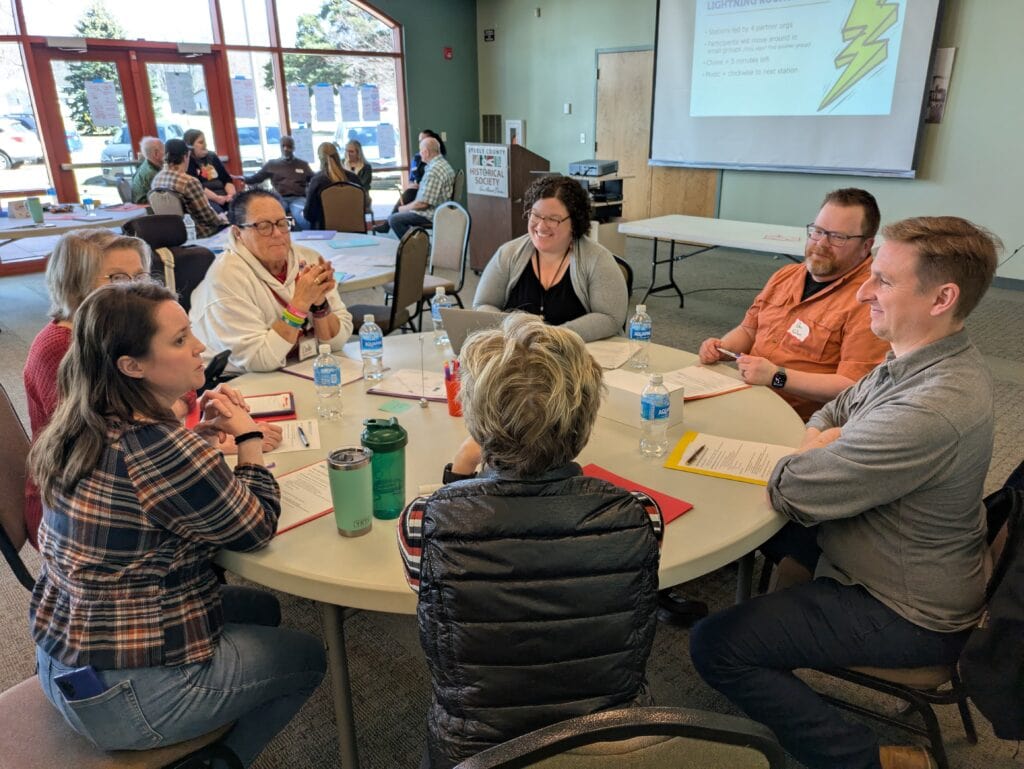
TFG got to see food shelves from the same towns connecting when they hadn’t before, learn what is working for each other and what isn’t, and explore ways they might work together in the future. At the center of everything, Lenarz-Coy and Holmes mention are people with lived experiences and the important role they play in designing whatever comes next.
“We know that equity must be at the very center of our work,” Lenarz-Coy said. To TFG, that means convening groups of individuals with lived experiences to serve in an advisory capacity and ensuring that even with cuts, those who are impacted the most, are not left out of solutions.
Collaboration Over Competition
Convening groups who haven’t worked together can be challenging. Despite barriers like busy schedules and organizational capacity, TFG knew that the first step in building trust among their network was creating the space and time for people to connect.
“It is incredibly difficult to convene people and ask them to be creative when we know what is coming will be bad, and in fact I know it will be worse than what we can respond to,” Lenarz-Coy said.
The team also knows that nonprofits, to operate, are often conditioned to only talk about the positive, and never about what hasn’t worked for them.
“Nonprofits don’t want to talk about failures because it makes you feel like you’re going to lose funding or support, but we don’t have time for that right now,” Lenarz-Coy said.
“We need to be honest about what isn’t working, and Rachel (Holmes) and I are trying to make these spaces a place where we can be honest about what does and doesn’t work,” she said.
TFG knows that working together must be the path forward. And the groups they are convening can agree on one thing: food is a human right.
“Throughout these convenings, we’ve learned again and again that it is important to be in conversation,” Lenarz-Coy said.

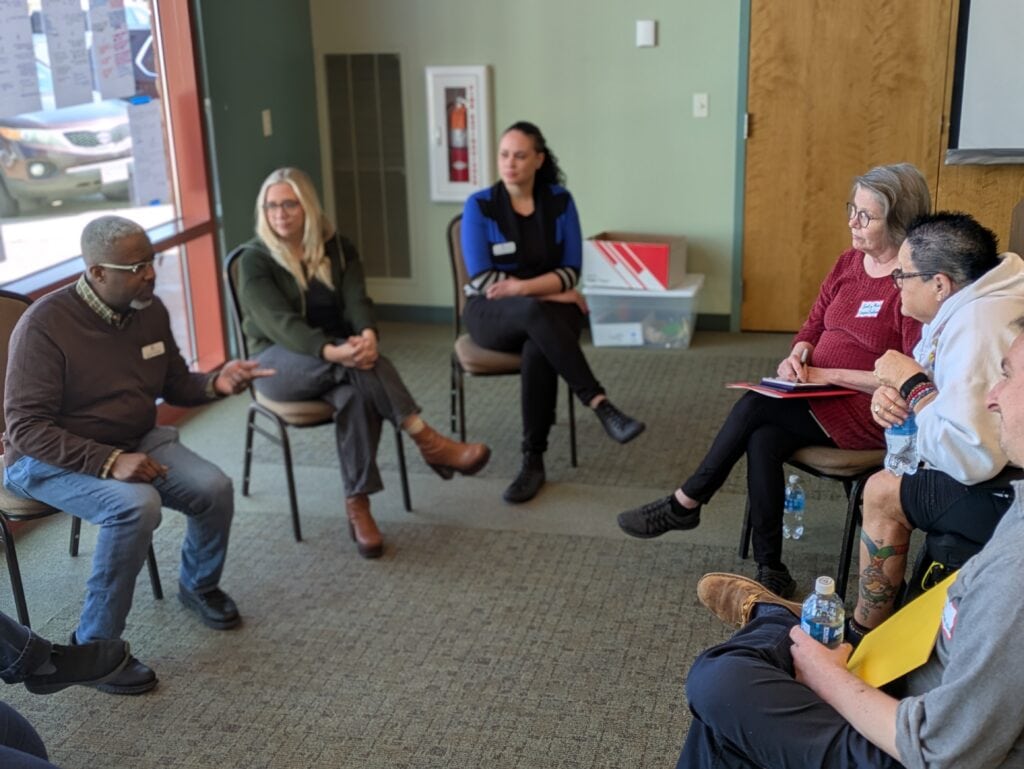
It’s particularly important for the sector to stay in communication with each other as SNAP cuts and changes to the program due to HR1 are coming, and the sector response needs to be clear, innovative, and collaborative.
SNAP has been an effective, low-waste program since its passage into law in 1964. TFG is continuing to work with their federal representatives to talk about SNAP and its importance. Community support is important, but the public and philanthropy cannot fund the gap that cuts to SNAP leaves.
“It is our mission to make sure people have food, and we’re going to keep letting people know food is a human right,” Holmes said.
In the meantime, Holmes and Lenarz-Coy are pragmatic about what else needs to be done. In order to meet the increased need expected due to the SNAP gap, the sector will need to embrace innovation and new ideas.
“Of course, the first solution to the problem is money, and a lot of it, but we know the only way to face what’s coming is collective brilliance and community solutions,” Lenarz-Coy said.
The team at TFG can tell the food shelves know things aren’t business as usual, and they are inspired to see people being honest about the difficult scenarios they are planning to face. The hope is that by building a network now, the leaders of food shelves across the state will have a strong network to rely on and mobilize when needed.
A Strong Network
In the coming months and years, leaders who operate food shelves will face difficult decisions about when to be open, and how much food they are able to distribute. TFG is planning to listen, respond, advocate, create space for relationships to grow, and offer capacity support whenever possible.
Recognizing the need for increased preparedness and strategic planning, TFG receives funding from the state to offer trainings and capacity building for their food shelf partners, delivered in partnership with Propel Nonprofits (Propel). This partnership enabled TFG to offer two distinct support tracks:
- Training & Scenario Planning: Propel developed a series of workshops and customized webinars focused on budget contingency planning and scenario forecasting to help food shelves adapt to rapidly changing circumstances.
- Strategic Services: Propel’s Strategic Services team is hosting office hours in October and November, providing thought partnership to food shelves navigating uncertainty and surge in demand.
“We have a history of providing guidance or giving ideas to food shelves that they could try, but right now we want to step back, make space, provide resources like Propel, not prescribe solutions, and let leaders from each region convene at the table to make a plan,” Holmes said.
Like Lenarz-Coy said, these are leaders who pivoted to feed people during the COVID crisis, meaning they decreased hunger by increasing food shelf visits.
“There are forces that want us to be separate, but we know that coming together and making plans to mobilize to get food to community will be how we get through this,” Lenarz-Coy said.

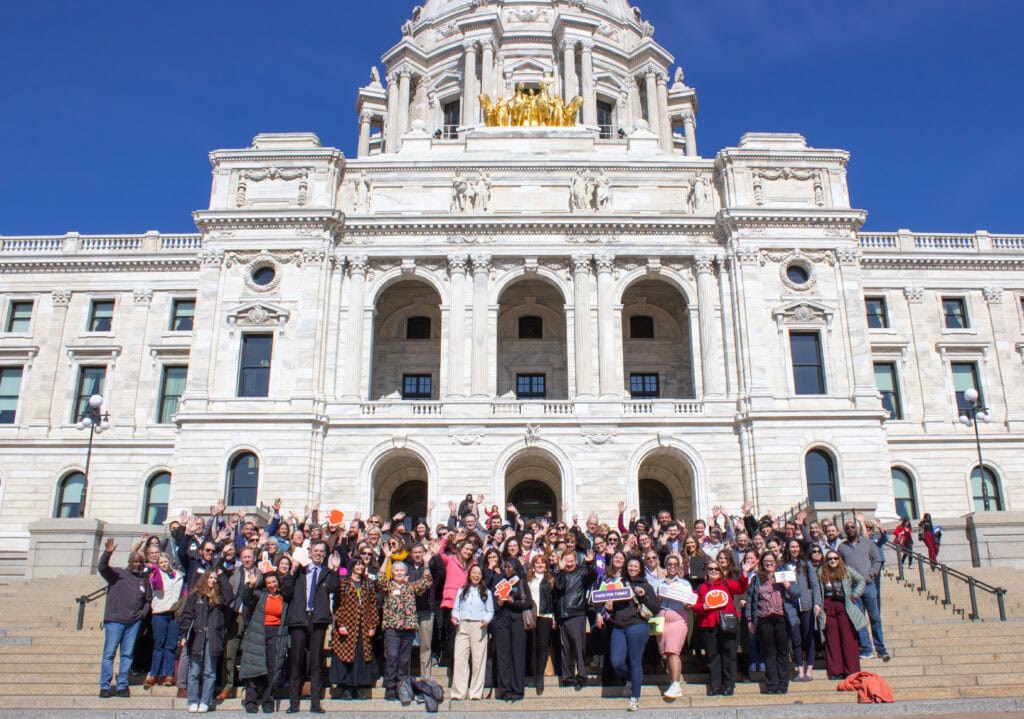
What You Can Do
To support the work of The Food Group, you can:
- Advocate to your local, state, and federal representatives and share TFG’s vision: a just and equitable food system with sustainable opportunity for everyone to grow and eat affordable and culturally connected foods.
- Engage in something that helps right now:
- Buy something from an emerging farmer
- Have a friend over for dinner who is having a hard time
- Share a meal with a friend or colleague
- Get to know what your local food shelf needs and support their work when you can.
Staff Author

Andrea Sanow
Andrea is the Marketing & Communications Director at Propel Nonprofits. She’s worked in the nonprofit sector for almost 15 years and serves on two nonprofit boards. She holds a BA and an MFA in Creative Writing from Augsburg University.
Read BioStaff Author
Andrea Sanow
Andrea is the Marketing & Communications Director at Propel Nonprofits. She’s worked in the nonprofit sector for almost 15 years and serves on two nonprofit boards. She holds a BA and an MFA in Creative Writing from Augsburg University.
Read Bio